

IT and martech technology for marketing teams
Campaigns run on software. We build and integrate the layer underneath: CRM, analytics, conversion tracking, automation and cloud infrastructure.
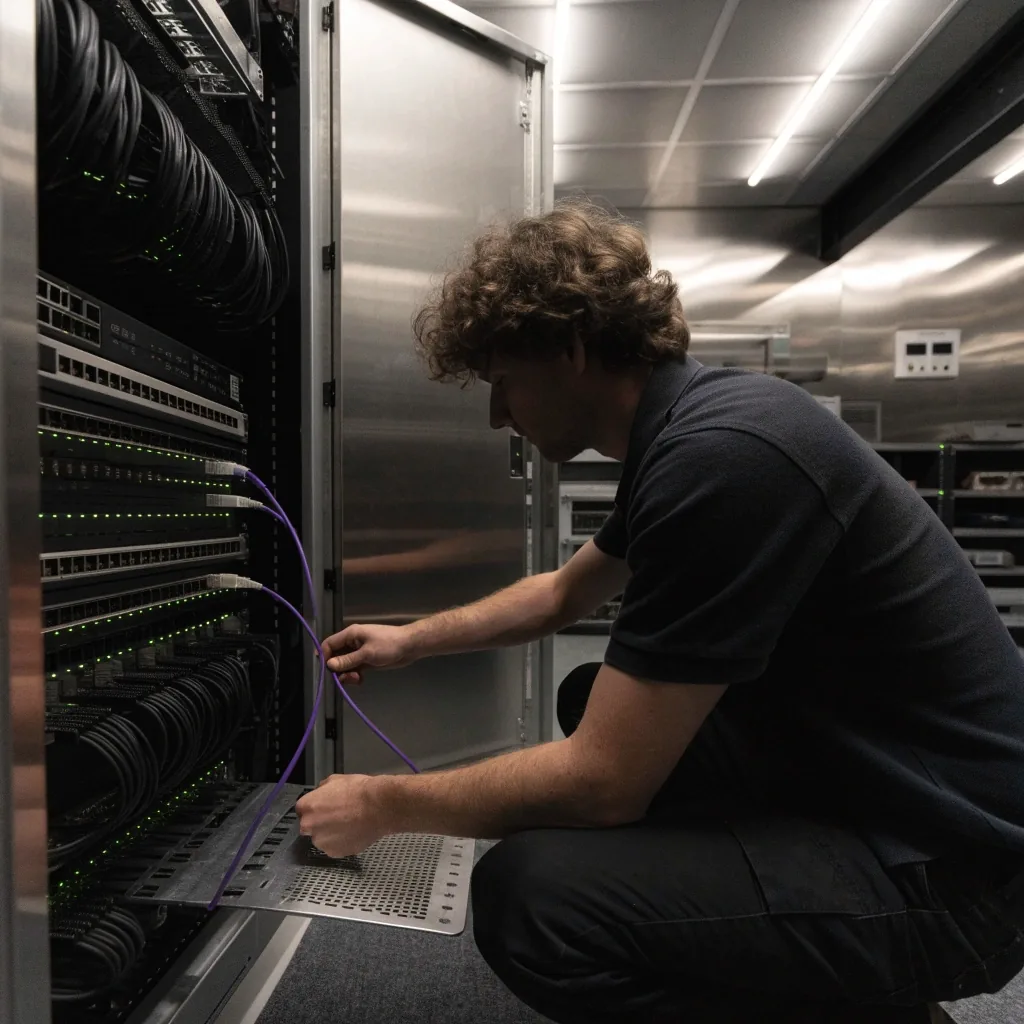
What a martech stack actually is
A martech stack is the set of systems that collect, store, connect and act on customer data. In a typical mid-size Polish company that means a CRM, an automation or email platform, an analytics setup, a tag management layer and the hosting underneath.
The stack isn't the point. The connections are. A CRM that doesn't receive campaign data is a contact list. Analytics that can't see the CRM is a traffic report. Most of our work is building the joins between those systems.
Systems we usually connect
- CRM and sales pipeline
- Marketing automation and email
- Analytics and attribution
- Tag management and consent
- Cloud hosting and integration services

CRM integration with HubSpot and similar platforms
HubSpot is a common centre of gravity for B2B and mid-market marketing operations in Poland: CRM, automation, landing pages, lead nurturing and the handoff to sales.
Integration work usually involves mapping what a lead means at each stage, syncing campaign source data into the contact record, and making sure marketing and sales agree on when a lead is real. That last part is organizational, not technical, and it's where most projects stall.
Lead-stage mapping
Every stage named the same way in the CRM, in the automation platform and in the campaign reports, so a handoff does not lose its history.
Campaign source in the record
Source, medium and campaign carried onto the contact so sales sees where the enquiry came from without asking marketing.
Two-way sync rules
Written rules for which field wins on conflict, so a bulk import on either side cannot overwrite verified contact data.
Handoff to sales
An agreed definition of a qualified lead, tested against real enquiries from the last quarter before anything goes live.
Conversion tracking that survives a redesign
Conversion tracking is the chain from a user action to a number in a report. It breaks constantly: site redesigns, cookie changes, new consent flows, third-party scripts loading in the wrong order.
We build tracking as a documented layer with a data layer specification, version control and a test procedure. It sounds heavy for a small site. It's cheaper than discovering six months of data is wrong during a budget review.
What a tracking layer includes
- A written data layer specification
- Version control on every tag change
- A test procedure run before each release
- A named owner for consent and tag changes
Analytics and the questions you actually ask
Analytics should answer specific questions: which channel produced revenue, what a lead costs by source, where the funnel leaks. Anything beyond that is a dashboard someone built because it looked good.
We set up measurement around the decisions you make, then add dimensions as questions appear. Attribution models get chosen to match your sales cycle, not to match a vendor's default.
Which channel produced revenue
Channel-level revenue attribution joined to the CRM, so a closed deal keeps the source that started it.
What a lead costs by source
Spend and lead volume reconciled per source, so a channel is judged on the same basis across quarters.
Where the funnel leaks
Step-level drop-off between first visit and qualified lead, so a fix targets a stage rather than the whole journey.
Which content moved a deal
Touched content mapped onto the sales cycle, so a long B2B decision is read as a sequence rather than one click.
Cloud infrastructure: Azure, AWS and what the choice means
Cloud platforms such as Microsoft Azure and AWS carry most modern marketing and media systems: data storage, analytics processing, application hosting, integration services.
The choice between them usually follows your existing estate and your team's skills rather than a feature comparison. What matters more is how the infrastructure is set up: environments separated, data retention defined, costs monitored, access controlled. Marketing systems that grow quietly become expensive and hard to audit.

How we set it up
Four rules we hold to on every cloud build
- Environments separated. Staging and production never share credentials or data.
- Retention defined. A written period per data type, not an open-ended default.
- Costs monitored. Spend tracked against owners, so growth is noticed before the invoice.
- Access controlled. Named accounts, least privilege, and a review when someone leaves.
Automation and AI-assisted marketing
Automation handles the repetitive parts: lead scoring updates, lifecycle emails, report generation, data syncing between systems. AI-assisted marketing extends that into pattern recognition and content variation.
Where we use it
Audience clustering
Grouping contacts by behaviour and value so a campaign speaks to a segment rather than the whole list.
Where we use it
Creative variants
Multiple ad or email variants generated for testing, reviewed by a person before any of them runs.
Where we use it
Anomaly detection
Watching spend and delivery for a change that looks wrong, so it is checked the same week it appears.
Where we use it
First-draft copy
Starting points for a brief that an editor rewrites, never copy published straight from a model.
Where we do not use it
Two limits we hold: we do not let automation make unsupervised budget decisions, and nothing reaches a customer without a person having reviewed the logic behind it. That line is drawn at the start of a build, not after something goes wrong.
Data quality and consent
Everything above depends on data you're allowed to use and can trust. Duplicate records, missing source fields and inconsistent naming will quietly corrupt any analysis you run on top.
We treat consent management and data retention as part of the build, not as a legal afterthought. It also happens to make the data cleaner, because you stop collecting things you can't use.
Handover and documentation
When an engagement ends, the stack should still work. That means documentation: what's tracked, where data flows, who has access, how to change things safely.
We've inherited too many setups where nobody knows why a tag fires. It's a fixable problem, and it's cheaper to avoid than to untangle.
What stays in your name
Accounts, data and documentation stay with you, and access is handed over at the end of an engagement. A tracking audit is a defined piece of work with a written findings document you can act on yourself or with us.
See how we workQuestions we get about martech builds
Straight answers to the three things clients ask most before a technology engagement starts.
Do you replace our existing CRM or work with it? Open
We work with what you have unless there's a clear reason to change. Most value comes from connecting systems properly, not from swapping vendors.
Can you audit tracking without a full project? Open
Yes. A tracking audit is a defined piece of work with a written findings document you can act on yourself or with us.
Who owns the data and accounts? Open
You do. Accounts, data and documentation stay in your name, and access is handed over at the end of an engagement.

Start with the part that is broken
A first conversation usually covers what your CRM holds today, which reports you trust, and where the current tracking breaks. Bring an example of a number you suspect is wrong and we can trace it back together.
PPW Sp. z o.o. — ul. Stanisława Przybyszewskiego 91-99, lok. 15, 93-126 Łódź, Poland · +19312557831 · Monday to Friday, 9:00 AM – 6:00 PM